
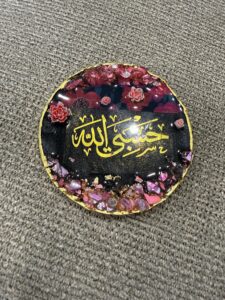
Resin art work that combines traditional Islamic calligraphy with modern decorative elements. At the center, a gold-painted Arabic inscription is set against a dark, shimmering background, creating a striking focal point. The piece is embellished with pink floral accents and crushed crystals in shades of purple and magenta along the edges. A metallic gold trim finishes the perimeter of the disc, adding a sense of luxury and refinement. This handcrafted object serves as both a spiritual reminder and a piece of contemporary home decor. Mixed media materials are layered to create a three-dimensional texture that catches the light.

Materials Used
Epoxy Resin: The entire piece is made with thick, high-gloss layer of  resin, which acts as both a protective finish and a binder for the various embedded elements
Gold Pigment : The central Arabic calligraphy and the textured rim of the circular base are finished in a bright gold color, likely achieved using gold paint, a metallic marker, or gold leaf
Crushed Glass or Crystals: The bottom portion of the piece features large, jagged pieces of pink and purple translucent resin which appear to be crushed glass.
3D Floral Accents: Small, realistically shaped pink flowers (washi tape)  on top of the resin and embedded within it to add physical texture.
 

Safety measures

Safety is critical when handling chemical resins, follow the standard safety rules
Ventilation: Always work in a well-ventilated area. Epoxy resin releases fumes during the curing process that can be harmful if inhaled in a confined space.
Personal Protective Equipment (PPE):
    ◦ Gloves: Wear disposable nitrile gloves at all times. Epoxy can cause severe skin irritation or a permanent allergy if it touches your skin.
    ◦ Respirator: Use a respirator mask specifically rated for organic vapors. A standard dust mask will not protect you from chemical fumes.
    ◦ Eye Protection: Wear safety goggles to protect your eyes from accidental splashes while mixing or pouring.

.

Cleaning Tools While Resin is Still Wet
If the resin has not yet hardened, it is much easier to remove.
Isopropyl Alcohol (91% or higher): This is the most common solvent used to break down liquid resin. You can wipe down plastic or metal tools with a paper towel soaked in alcohol.
Acetone: A stronger solvent that can dissolve resin quickly. However, be careful as acetone can melt certain types of plastic tools.
Baby Wipes: Many artists use high-alcohol content baby wipes for a quick cleanup of minor spills or sticky tool handles.
Cleaning Reusable Silicone Tools
As noted in our conversation history, cured resin creates a permanent bond on many surfaces, but it does not stick well to silicone.
The “Peel” Method: If you use silicone stir sticks or mixing cups, the easiest way to clean them is to let the resin cure completely. Once hard, you can simply “pop” or peel the resin out of the silicone mold or off the tool.

Important Note: Never wash liquid resin down the sink. It will cure inside your pipes and cause permanent blockages. Always wipe tools clean with a solvent and dispose of the paper towels in the trash

Leave a Reply

Your email address will not be published. Required fields are marked *